Establishing clear screen-time ground rules for casual gaming with kids helps balance fun, learning, and healthy habits while fostering positive family gaming experiences.
Understanding the Importance of Screen-Time Limits
Setting screen-time ground rules for casual games with kids is essential for maintaining a healthy balance between gaming and other activities. Casual games, often family-friendly and puzzle-based, provide great opportunities for fun and learning, but without limits, excessive play can interfere with sleep, physical activity, and social interaction. Establishing clear rules helps kids develop self-discipline and ensures gaming remains a positive part of their daily routine.
Choosing Age-Appropriate Games
Before implementing screen-time rules, it’s important to select games that suit your child’s age and maturity. Casual games that focus on puzzles, creativity, or simple mechanics tend to be more accessible and less likely to cause frustration. For example, games like tile-matching puzzles, word games, or simple farming simulators offer engaging gameplay without violent content. When kids enjoy their games, they are more likely to follow screen-time rules because gaming feels like a rewarding activity rather than a chore.
Creating a Clear Daily or Weekly Schedule
One effective approach is to set specific time limits for gaming sessions. For instance, you might allow 30 to 60 minutes of casual gaming on school days and a little more on weekends. Using a visual schedule or timer can help children understand and anticipate their gaming time. This also teaches them the value of time management. For example, a rule could be “You can play after homework and chores are done, for up to 45 minutes.” Having consistent limits reduces conflicts and helps kids develop healthy habits.
Encouraging Breaks and Physical Activity
Long stretches of screen time can cause eye strain, fatigue, and reduced physical movement. Encourage kids to take short breaks every 20 to 30 minutes to rest their eyes and stretch. You might pair gaming with physical activity by suggesting a quick walk, jumping jacks, or even a family dance break. For example, after 30 minutes of puzzle gaming, a 10-minute outdoor play session can refresh both body and mind. This balance supports overall well-being and prevents gaming from dominating free time.
Using Gaming as a Family Bonding Activity
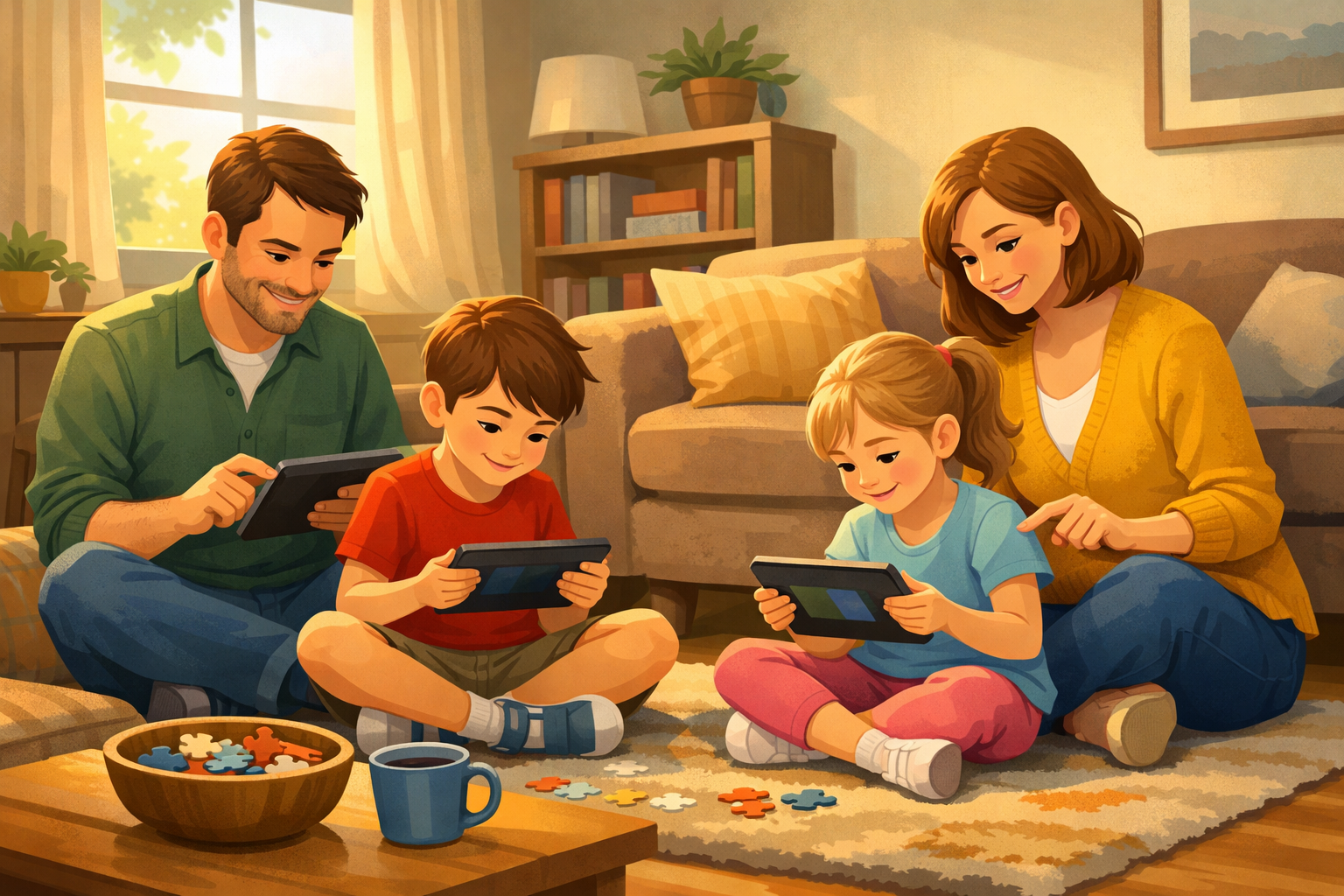
Casual games are often designed for easy pick-up-and-play sessions, making them perfect for family gaming time. Establish rules that include playing together or taking turns. Cooperative puzzle games or simple mobile games can foster communication and teamwork. For example, parents and kids can solve word puzzles together or compete in friendly rounds of a trivia game. This approach not only limits screen time but also strengthens family relationships and creates positive memories around gaming.
Setting Tech-Free Zones and Times
Designate certain areas or times in the home as screen-free to encourage other activities. For example, no gaming at the dinner table or during the hour before bedtime. This helps kids separate gaming from essential routines like eating and sleeping. Having tech-free zones also encourages reading, board games, or creative play. Clear boundaries around when and where gaming happens make it easier for kids to respect limits and reduce the risk of gaming interfering with important daily habits.
Monitoring Content and In-Game Communication
Even with casual games, it’s important to monitor the content and any online interactions. Choose games without ads, in-app purchases, or chat features that might expose kids to inappropriate content or pressure. For example, offline puzzle games or single-player farming sims provide a safe environment without distractions. If multiplayer features are involved, set rules about who kids can play with and supervise any communication. This ensures gaming remains a safe and positive experience.
Teaching Kids to Self-Regulate
As kids grow, encourage them to take responsibility for their own screen time. Discuss why limits exist and involve them in setting rules that feel fair. You might create a reward system where they earn extra playtime by completing chores or reading. For example, a child could gain 15 extra minutes of gaming for every 20 pages read from a book. Teaching self-regulation empowers kids to make healthy choices and prepares them for more independent use of technology.
Practical Tips for Implementation
- Use timers or parental controls to enforce limits consistently.
- Keep gaming devices out of bedrooms to avoid unsupervised play.
- Model balanced screen use by limiting your own device time.
- Encourage alternative hobbies like puzzles, sports, or arts and crafts.
- Regularly review and adjust rules as kids’ needs and schedules change.
Conclusion
Establishing screen-time ground rules for casual games with kids is about creating a balanced, enjoyable, and safe gaming experience. By choosing appropriate games, setting clear limits, encouraging breaks and physical activity, and involving the family, parents can help kids develop healthy habits around screen use. These practices foster not only better gaming experiences but also stronger family connections and overall well-being. With thoughtful planning and open communication, casual gaming can remain a fun, enriching part of family life.